
Joyful Mathematics for Curious Minds
Which comes first: the joy, the confidence, the competence, or the curiosity?
Learning as a Feedback Loop
At The Number Garden, we see math learning as a feedback loop. There are a million ways to describe that loop, but we’re fond of this one:
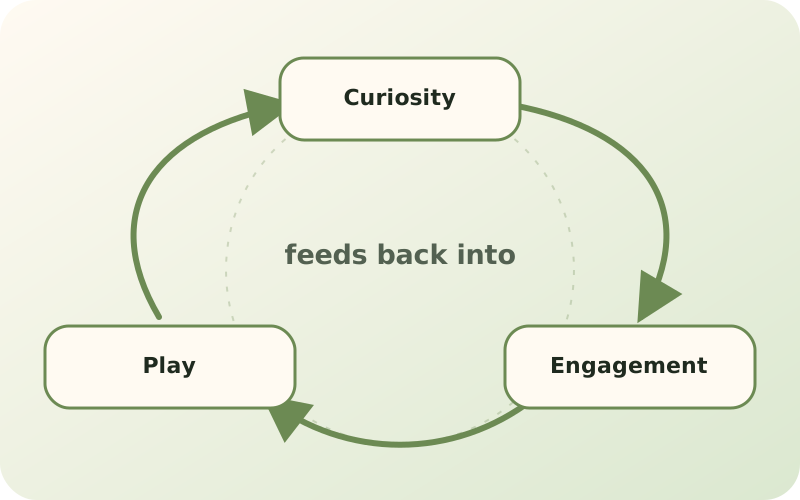
When math instruction is going well, a student gets curious about something and starts thinking about it. As they think about it, they begin to play with the ideas. As they play around, they notice something that inspires more curiosity, which inspires more thinking and more playing.
Before we know it, the student has been voluntarily practicing multiplication for 25 minutes, and we have to tell them to stop and go outside for recess.
But too often, the feedback loop looks more like this:
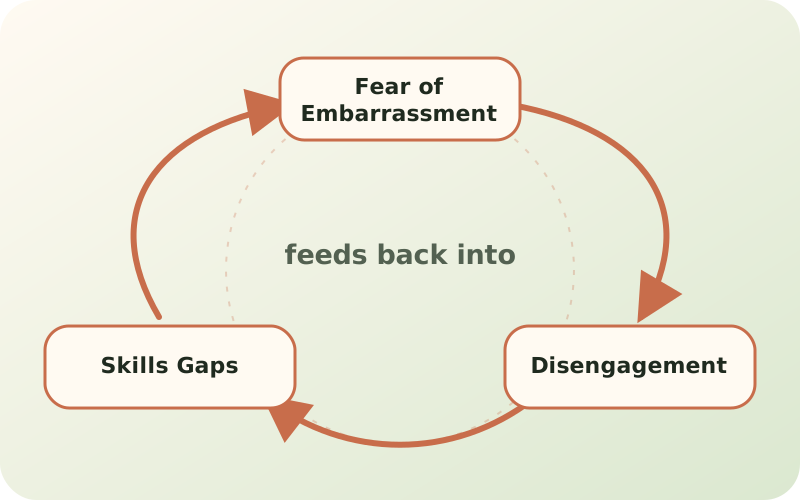
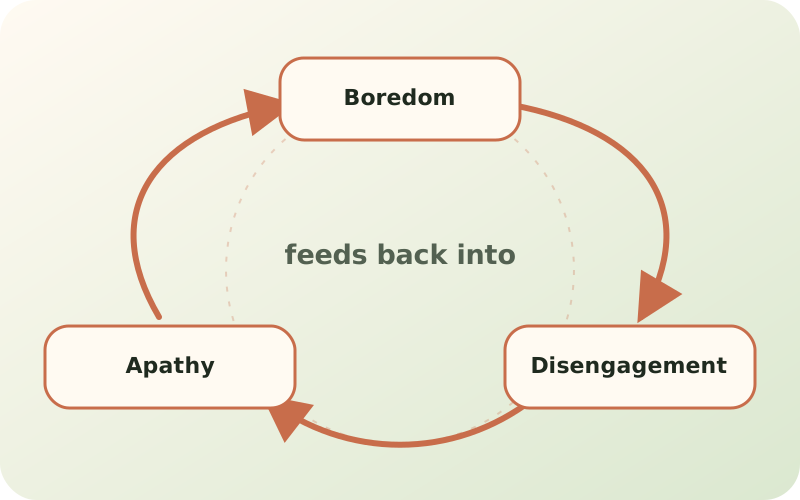
As parents and math teachers, it’s up to us to ensure that our students have access to engaging math instruction and to identify and mitigate any obstacles to engagement.
What Do We Mean by “Joyful Math”?
Joyful math comes in many shapes and sizes, including games, puzzles, problems, and projects.
You can find some of our favorites on our Resources page, from sources including Martin Gardner, Raymond Smullyan, James Tanton, Sunil Singh, and Vi Hart, as well as a growing collection of originals from The Number Garden.
We focus on delivering a joyful experience of mathematics because we believe it will have the greatest long-term impact. We aim to inspire students to find mathematics so engaging that they choose to keep doing it for years to come.
Who Is This For?
The Number Garden uses an inquiry-based teaching approach that invites students to pose their own questions and pursue their own answers.
We believe that everyone is capable of having a joyful experience of math: some people just need a little help getting back on track. We’re happy to work with folks who already love math and with those who need some support to find that part of themselves.
Practice and Play
Building math skills definitely does require practice. But there’s nothing stopping us from making our practice feel like play!
If you need to practice addition, you might play Pig or Don’t Break the Bank.
If you need to practice multiplication, you might try DaMult, Twenty Four, or Horse Shoes.
If you need to practice fractions or decimals, a Diffy Square will give you just as many problems as a worksheet, along with a delightful head-scratcher.
Acknowledgements
We are particularly grateful to John Conway, Elwyn Berlekamp, Richard Guy, Donald Knuth, Martin Gardner, Jean Kerr Stenmark, Virginia Thompson, Ruth Cossey, Paul Lockhart, James Tanton, Vi Hart, Dan Finkel, Katherine Cook, and Sunil Singh for their contributions to recreational mathematics.